








Issue 25
Read
Chapter 14
Defined by elegance and refinement in both its wines and its château.


Humility and quiet understatement are precious commodities in Bordeaux. For this is a region which, over its long history, has progressed from domination by noble proprietorships to investments by luxury houses and large conglomerates. With this evolution in ownerships, many châteaux have become status statements, gleaming symbols to outshine others in the neighborhood.
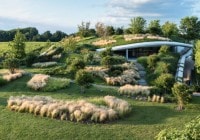
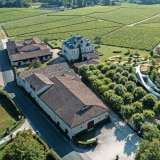
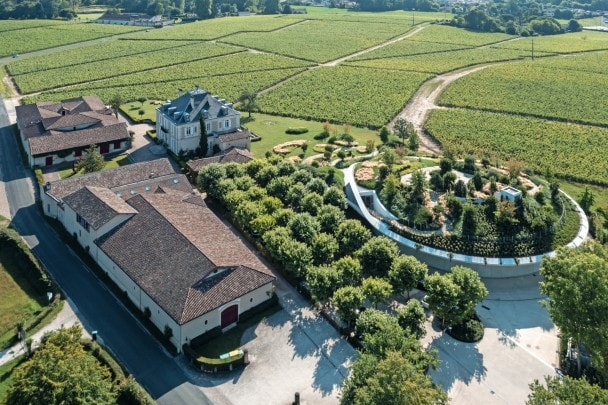
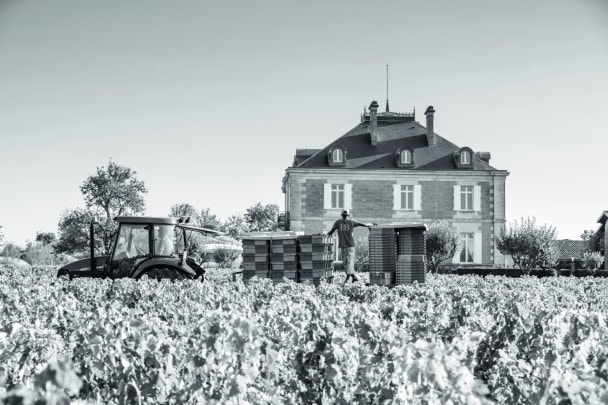
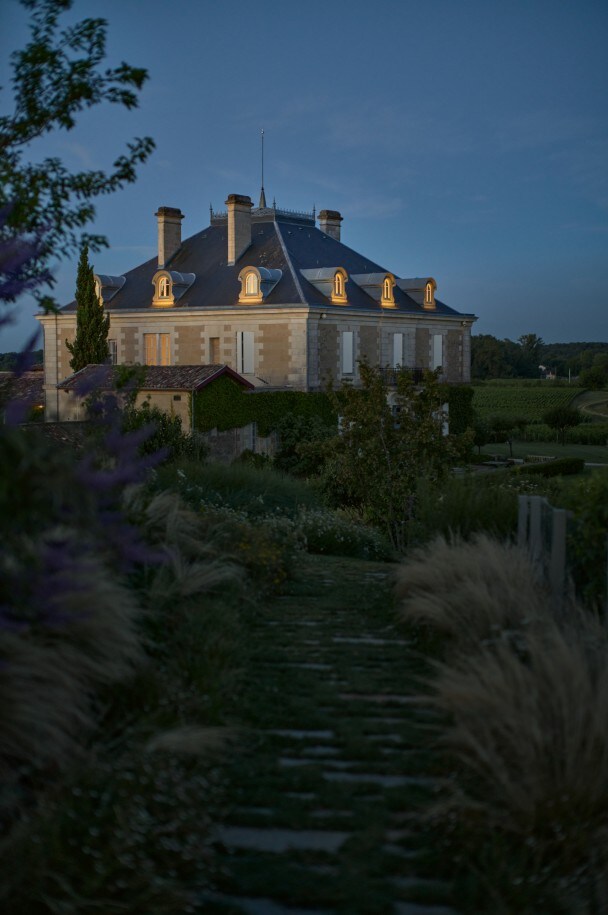
Not so for Château Haut-Bailly. Its château, elegant and refined, qualities that define its wines, is more in the style of a quiet understated country manor than a glossy grand showcase. Similar tasteful restraint followed a multi-year project to create a state-of-the-art chai. Rather than broadcasting the investment, the chai was largely constructed underground, its roof cloaked with a large garden blended into the hillside so as to give barely a hint of anything other than a gentle rise in the terrain.
The arm of Haut-Bailly’s history extends back hundreds of years. Today, for the wines of Pessac-Léognan (Haut-Bailly’s appellation) there is a stampede of sorts as savvy connoisseurs have awakened to the surge in quality that has been building for the past quarter century, bringing with it 100 point scores from the critics. Far from a “discovery”, wines in this Left Bank region located south of the city of Bordeaux pre-date by centuries those to the north in the Médoc. In the case of Haut-Bailly, the first written records of winemaking date to 1461 when the region was known as “Pujau”. However, both its name and the definition of the estate’s boundaries came later in 1630 when Firmin Le Bailly and Nicolas Leuvarde made the investments necessary for a more consequential commercial enterprise. Ownership by leading Bordeaux political figures followed in the 18th century with Christophe La Faurie de Monbadon (a member of the Bordeaux parliament) and later his son Laurent who was elected as the city’s mayor.
1872 witnessed the beginning of a profound elevation of the estate with the purchase by Alcide Bellot des Minières who acquired renown as the “King of the wine growers”. His devotion, investments, and talents greatly increased the quality of the wine and, importantly, the prices paid by the wine trade. As we shall see, prices set by transactions in the market are the most accurate barometer of excellence. Today’s world is one, where for many consumers, amateur “influencers” and “YouTube pundits” are accorded power to mold opinions. The wellbeing of these influencers and pundits, however, is left untouched if their opinions turn out to be erroneous. Historically, Bordeaux had a better system. A vibrant professional wine trade developed bringing together the estates (sellers), negociants (buyers) and brokers (intermediaries). Countless transactions developed a price structure. Those prices powerfully represented the collective professional judgments of quality. More than that, these decisions by true experts were ones that carried with them significant financial investments and risks.
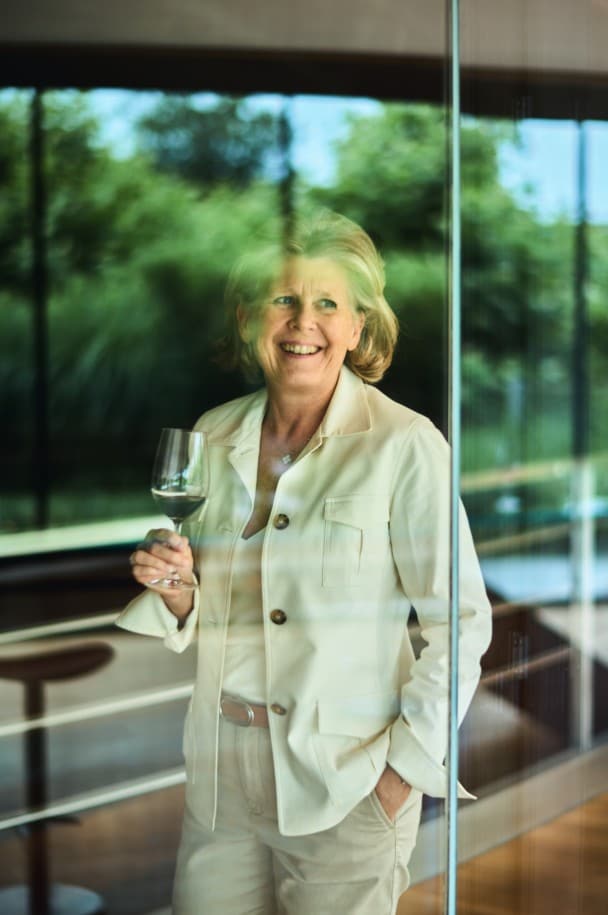
Véronique Sanders
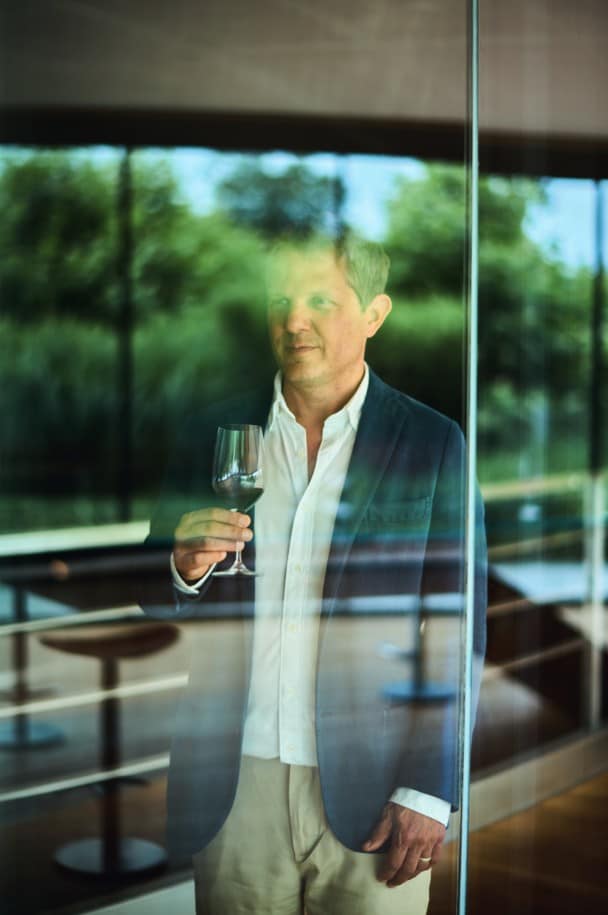
Chris Willmers
Experienced aficionados of Bordeaux wines know of the classifications of the châteaux into “growths”, the highest bearing title “First growth”, descending down to the category of “Fifth” with others not included at all. Although this classification has been and is still today widely quoted in wine parlance, writings, even wine shop labels, most, including experts, glide over the details and context of its origins. It was created in 1855 by the Bordeaux Chamber of Commerce to be paired with a map of the region offered as part of the Universal Exhibition of that year in Paris. The Chamber turned to the wine brokers to create the classification. The brokers well understood the importance of actual market prices established by willing sellers and willing buyers as a measure for rankings and drew upon their most current records as the basis for rankings. Their end product was the now famous 1855 classification.
There are lessons to extract from this highly abbreviated summary of history. First, markets and market prices are far better indicators of quality than “influencers”. In that respect, the 1855 classification can rightly claim to have been well grounded. However, that classification was never intended to be eternal. Nor was it fully expansive as it completely omitted large portions of Graves and the entirety of Pomerol and Saint Emilion. It simply reflected the state of a section of the market and prices at the time for use at an exhibit whose duration would be a few short months. Although Haut-Bailly was not recognized on that 1855 ladder, by 1903, as a result of Alcide Bellot des Minières’ efforts, Haut-Bailly’s market esteem, as signaled by the prices being paid by the wine trade, placed it at the very top of the pyramid fully equal to the classified First growths (Lafite, Latour, Margaux, Haut Brion)1. Keep in mind that the elevation of the estate undertaken by Alcide Bellot des Minières did not even begin until nearly two decades after the 1855 classification. Thus, even though that 1855 classification was never meant to predict what would transpire a half century later, the manner in which that market was priced leading to the 1855 classification and its functioning 50 years later that established the price levels in 1903, were conceptually similar. Those 1903 judgments, thus, were a sound reflection of Haut-Bailly’s distinguished terroir, which in skilled hands, could produce and had yielded wines of extraordinary finesse and structure.
1 A similar judgment of excellence is reflected in the 1930’s catalog of Nicolas, the leading French wine retailer. Haut-Bailly’s price likewise set at the level of the First growths.
After the estate passed from Alcide Bellot des Minières’ successful stewardship, two world wars and the Great Depression took their tolls on the succeeding ownership leading to a period of decline.
That changed with the 1955 acquisition by Belgian businessman Daniel Sanders who began the restoration of the estate. Over four generations, from Daniel, to his son Jean, then to Daniel’s great granddaughter, Véronique, the Sanders family, step by step, undertook the rebuilding of Haut-Bailly with the goal of bringing it to the glory it had achieved during the era of Alcide Bellot des Minières. Years of underinvestment always require dedication to overcome.
Daniel Sanders’ task was far more daunting with an historical frost arriving in the first year. Although the oldest vines were saved, wide swaths of the parcels were destroyed necessitating large scale replantings between 1959 and 1962.
By 1998, Jean confronted the question of how to organize his succession. After consultation, he came to the decision to sell. He had the good fortune to find not only a buyer but a genuine partner in Robert Wilmers, a leading American banker and Francophile. The two men, although from very different backgrounds, not only came to common understandings but became fond of each other.
Far from bringing the Sanders era to a close, what bloomed under the Wilmers’ ownership was an extraordinarily close relationship between the two families. At the outset, Bob Wilmers asked Jean to continue for two years to furnish a bridge for the transition. As he began working with the Sanders family and, increasingly with Jean’s granddaughter, Véronique, things changed. Instead of an exit by the seller, something else entirely evolved. During a conversation with Véronique asking for her vision for the future of the estate, Véronique pulled out the chart from 1903 placing Haut-Bally as equal to the First growths: Lafite, Latour, Margaux and Haut Brion. In addition, she cited the Nicolas 1930 price list demonstrating the same thing. She understood that the most precious asset of any prestigious estate was its terroir. The soil. One can invest in the chai, the wine maker, consultants, the edifice of the château, but always it is the soil that determines the maximum height that can be achieved. She saw that Haut-Bailly had the terroir to rise to the very summit in Bordeaux. “Let’s bring it back!” After hearing her vision, Wilmers came to a decision. Véronique remembers his words: “Please stay for two years alongside your grandfather. If at the end of that period, things are going well, the post is yours!” Thus, began what is now her 25th year as Executive President of Haut-Bailly.
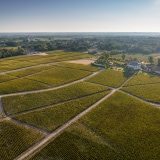
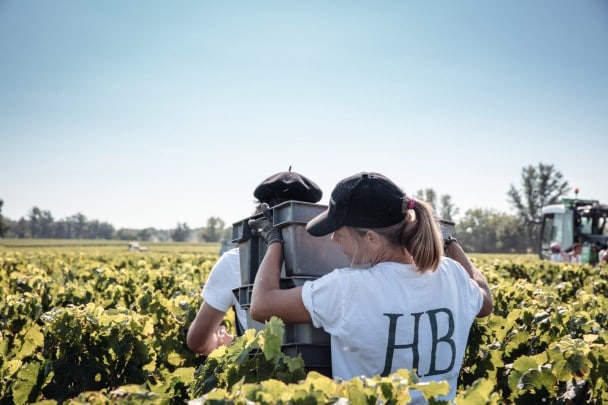
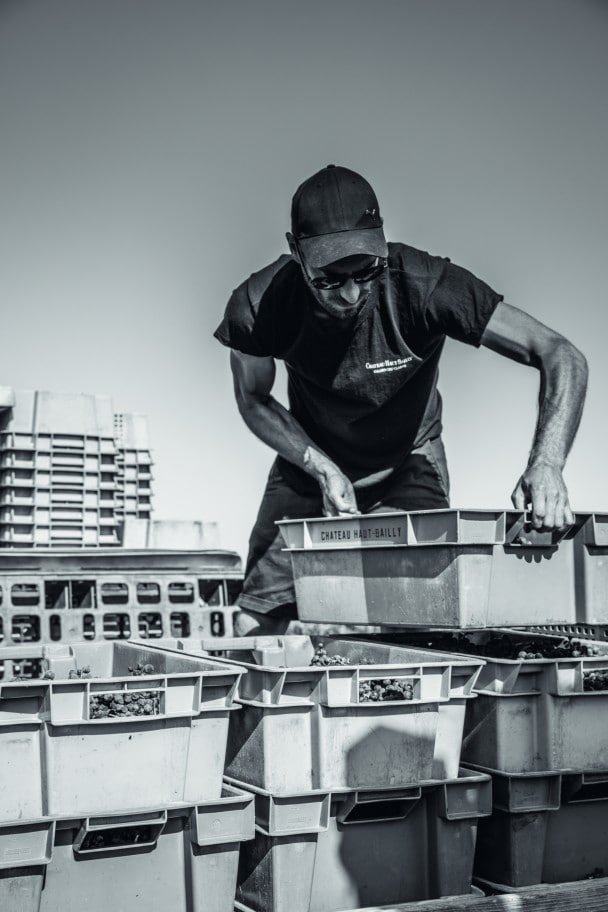
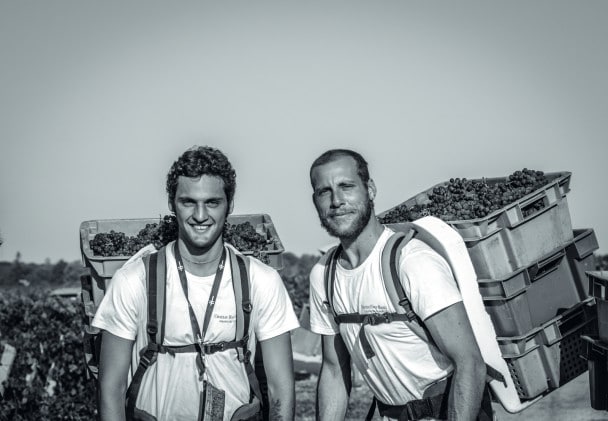
That quarter century collaboration which followed has seen massive investments in the facilities and the vineyards. The first projects focused on the vineyards. Haut-Bailly’s 39 hectares of vineyards are planted 60 % Cabernet Sauvignon, 34 % Merlot, 3 % Cabernet Franc, 3 % Petit Verdot. Nestled within the boundaries is a jewel, a 4 hectare parcel of vines more than 100 years old planted by Alcide Bellot des Minières. There were some who counseled Véronique to rip out these vines and replace them so as to obtain a higher yield. In the same way that fabled French museums view their exhibits as precious parts of the nation’s patrimony, Véronique saw this parcel in the same way, a living patrimony of the estate. In contrast with the bulk of the château’s parcels, this historic vineyard was “field blend” meaning that the six different varieties of grapes (which oenologues term “cépages”) were all intermixed in the planting. Owing to the age of the vines, each is looked after one by one. Before any interventions are undertaken careful study and thought occurs. Even pruning is conducted with exceeding restraint. In the past, this parcel was harvested all at one time, which was not optimal, as the different cépages do not all ripen at the same time. Véronique changed that practice. Now the vines are harvested separately (by hand as is true for Haut-Bailly as a whole) according to their degree of ripeness, small ribbon tags used as signals to the workers.
For the remainder of the estate, Véronique twice commissioned detailed soils studies, occurring in 2000 and 2020. Knowing the structure and chemical composition at different depths has been used to guide replantings. One example: Cabernet thrives best with gravel, Merlot with clay.
Consistent with the estate’s devotion to the health of each of its vines, the pruning practices are restrained. Haut-Bailly is in the vanguard in Bordeaux in its adoption of Denis Dubourdieu’s method of gentle, plant centric pruning. Instead of uniformly clipping an entire parcel, each vine is individually assessed and pruned accordingly. This vine-by-vine care extends to the canopy. Haut-Bailly believes in avoiding extensive removal as shading helps protect the clusters from heat. At the same time, lateral shoots are removed to promote air circulation, important for moisture mitigation.
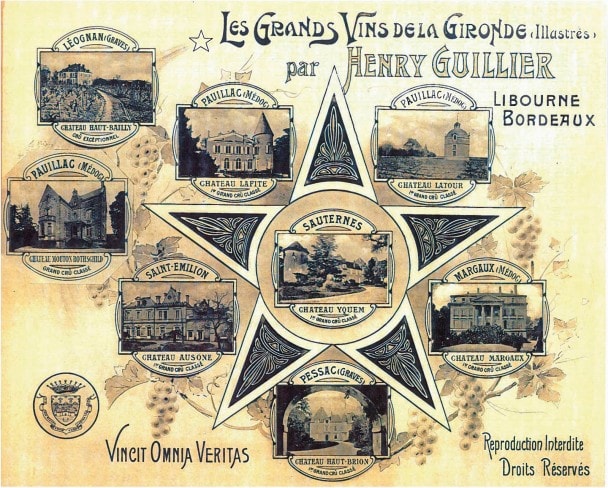
The 1903 grouping of Haut-Bailly within the top rung of Bordeaux First Growths.
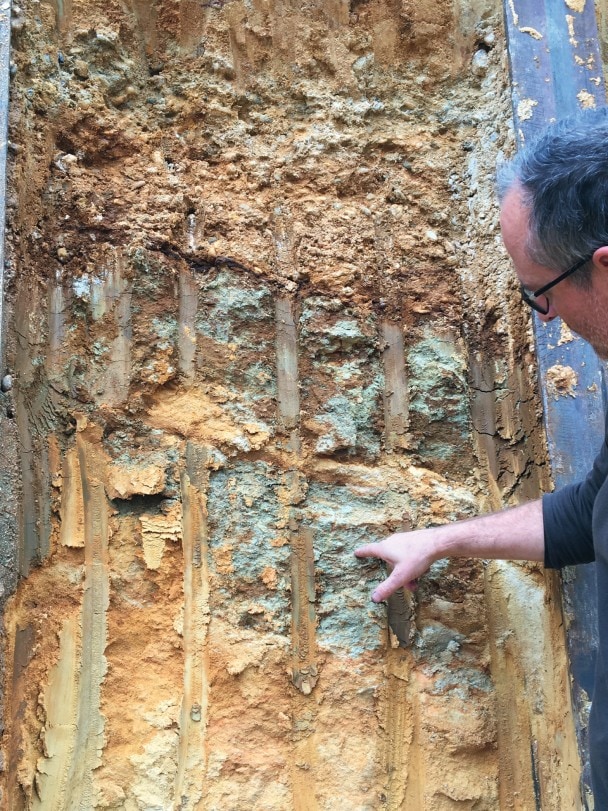
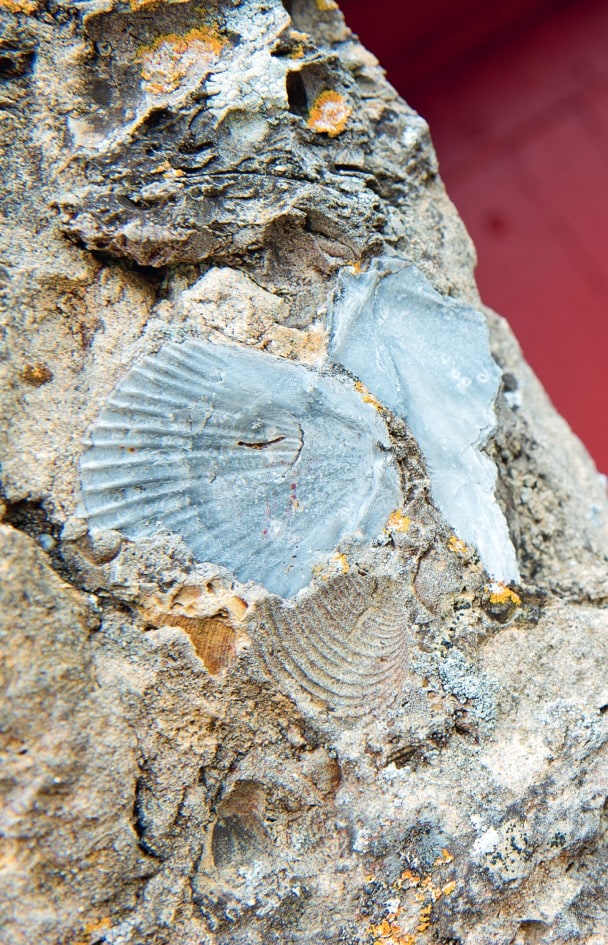
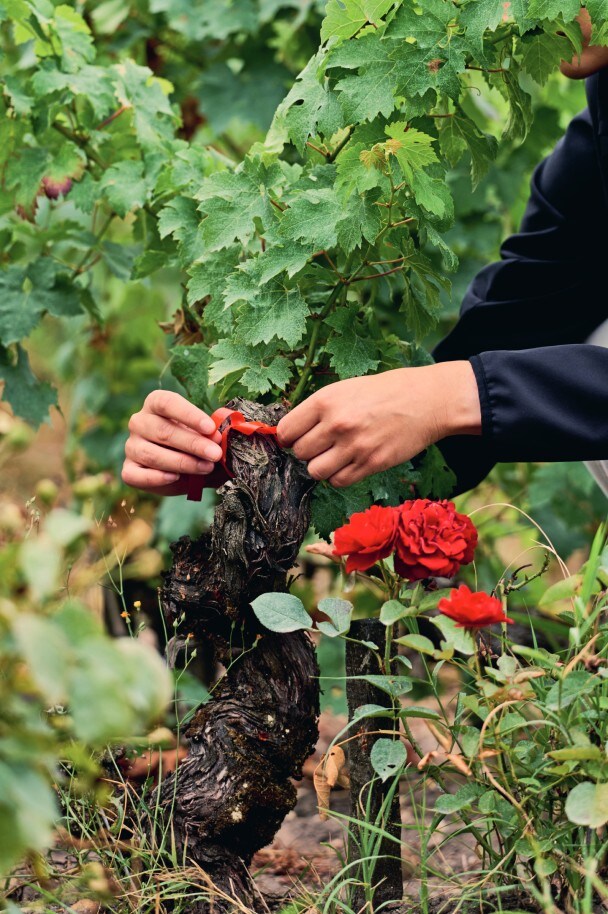
Soil samples taken from the vineyard. Tying a ribbon on one vine to signal its degree of ripeness.
The same respect for nature is reflected in the plowing between rows which is minimized. Haut-Bailly has deployed an innovative plow that works with extremely tight tolerances, to plow just below the surface. The goal is to leave the natural worms in the soil largely undisturbed. Véronique romantically describes them as “soils engineers”.
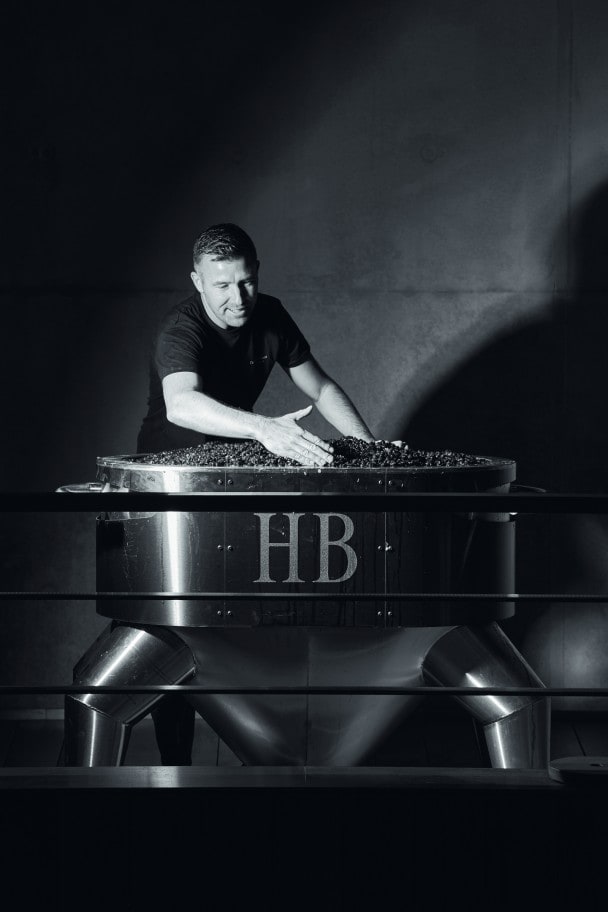
Today, most striking to visitors is the chai. In contrast with the imposing regal classical facades erected throughout Bordeaux, the Haut-Bailly chai seamlessly blends into and becomes one with the hill upon which it resides; its garden and trees appearing as a continuation of the landscape. The project was conceived as the coda to a celebration. Following famed wine critic Robert Parker’s bestowing a 100 point score to Haut-Bailly’s 2009 vintage, the core of the team flew to New York in 2015 for festivities with the Wilmers family. Over the North Atlantic during the return to France, came the idea of “Haut-Bailly of tomorrow”. Parisian architect Daniel Romeo was commissioned for the design. Although its exterior with its treed garden is a model of understatement, perhaps “disguise” a better description, the interior arranged as a circle is a dramatic expression of modernity and utility. Every detail of this state-of-the-art design is the product of two years of study, reflection, experience, and, most of all, expertise. Examples of the depth of thought informing the construction: a circular ramp to facilitate the flow of bins from the harvest so as to minimize “traffic jams” thereby reducing the time from picking to arrival for sorting2, entirely gravity flow from the fermentation tanks to the barrels, the shape of the tanks and the access doors and even interior lighting to simplify the cleaning process, detailed precise temperature monitoring and management of each tank, tanks made of medical grade stainless steel, barrels of different sizes adapted to the quantity of each cépage, even chestnut rims fitted to the barrels to facilitate rolling (and, co-incidentally, to attract insects away from the oak). One other benefit from the design, the roof garden provides natural cooling for the interior minimizing energy use and optimizing water conservation.
2 Haut-Bailly sorts its harvests, by hand, at three different stages to ensure quality—during the picking selecting the best clusters, then upon arrival at the chai on the first sorting table, finally individual berries sorted on a vibrating table by a team of four to six people.
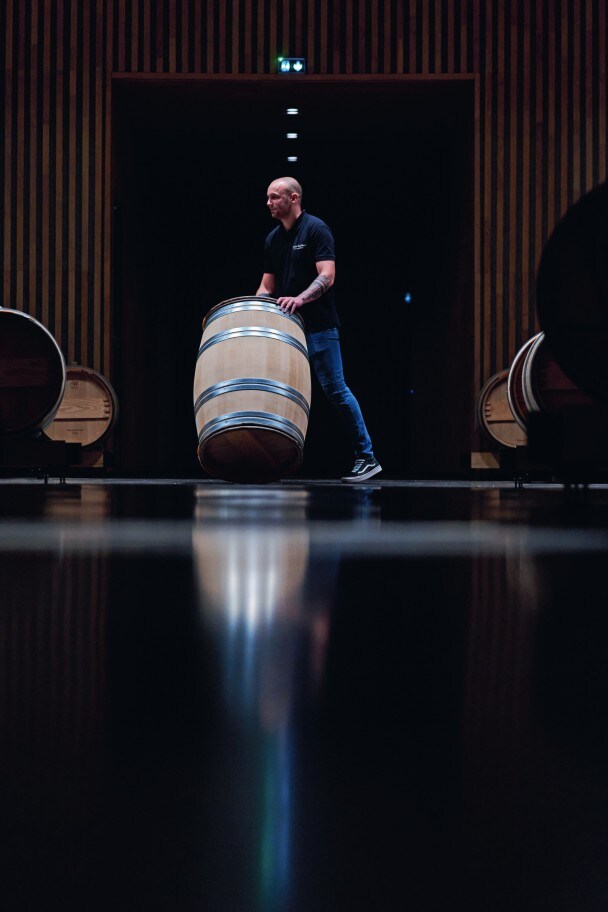
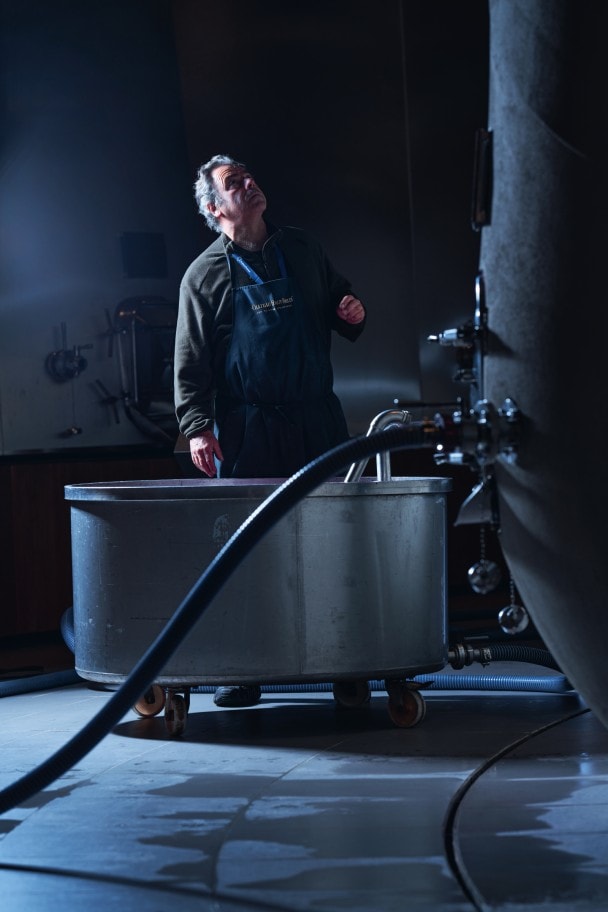
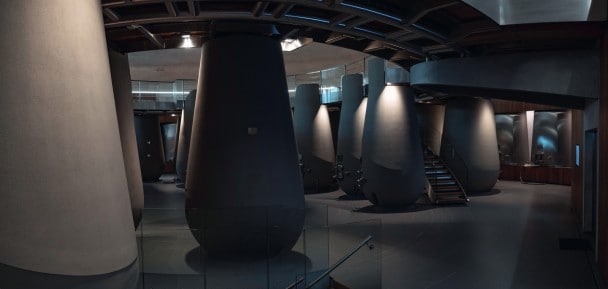
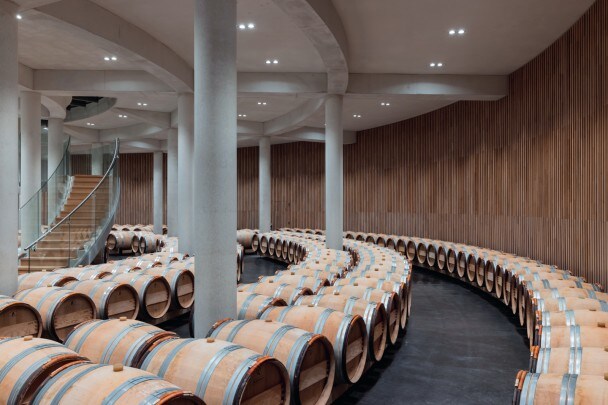
Robert Wilmers passed away in 2017 before he could witness the chai of Haut-Bailly of tomorrow. He has been succeeded by his son, Chris, who is a Professor of Ecology at the University of California Santa Cruz. Chris and Véronique, with the full support of the Wilmers family, share a common vision for, not only the wine itself, but also the environmental footprint of the winery. Haut-Bailly has earned two important certifications: HVE (High Environmental Value) level 3 signifying preservation of biodiversity and impact-limiting environmental agricultural practices and High Environmental Quality for the chai with an “Excellent” ranking.
Testament to the Wilmers/Sanders achievements: widespread praise from wine critics. Averaging the scores from 19 different leading international wine writers, Haut-Bailly finds itself once again tightly grouped with the top First Growths! The vision of Véronique Sanders in 1998 has been validated. A century after the tour de force achieved by Bellot des Minières, Haut-Bailly has once again joined the rarified ranks of Bordeaux’s most renowned estates. Determination and hard work have realized that ambitious goal.
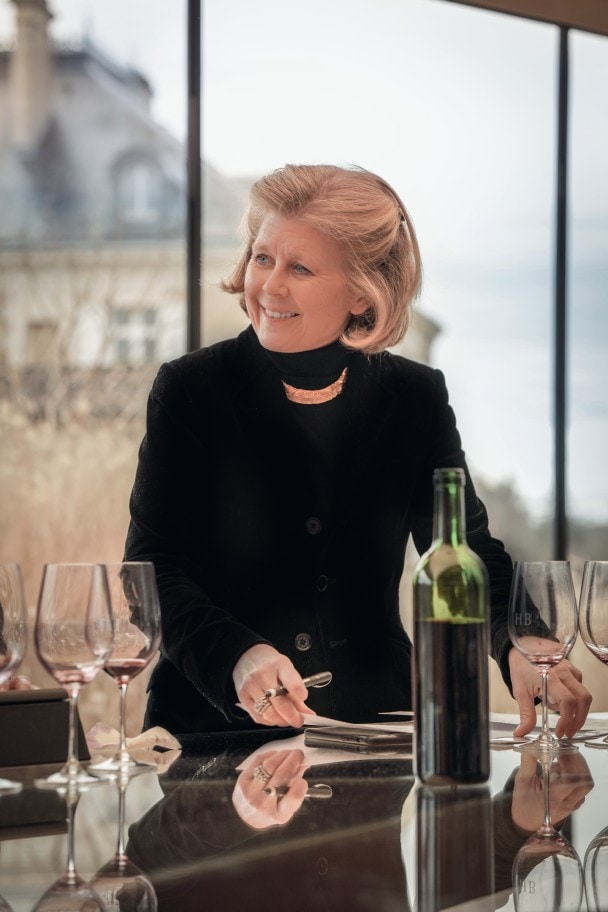
Véronique Sanders.
Dr. George Derbalian is the Lettres du Brassus wine expert. Dr. Derbalian is the founder of Atherton Wine Imports, located in northern California. Not only has he become one of the United States’ premier importers of fine wines, but he has acquired a well-deserved reputation as one of the leading and most respected wine connoisseurs and expert tasters in the world. Each year, Dr. Derbalian travels the wine circuits of Europe and the United States, meeting with wine producers, owners of the finest domains, maîtres de chai, and other key figures in the world of wine. Throughout the course of each year, he tastes literally many thousands of current production and vintage wines.
2024 CHÂTEAU HAUT-BAILLY.
(JSK) BARREL TASTED APRIL 2025 AT THE CHÂTEAU.
Perfect flowering followed by damp in May; dry July August; September rain. Merlot ripened early. A wine of wonderful finesse and balance. No dimension in excess. Deep dark colored fruits. Touch of toast, spice and smoke. Good weight on the palate.
2024 HAUT-BAILLY II.
(JSK) BARREL TASTED APRIL 2025 AT THE CHÂTEAU.
Fruity, open, elegant and already soft. Red berries/raspberry. Touch of vanilla. All in harmony. Easy and playful.
2022 CHÂTEAU HAUT-BAILLY.
(JSK) TASTED APRIL 2025 AT THE CHÂTEAU.
Rain in June. Hot summer followed. Harvest during warm temperatures. Regal. Complex perfume of cassis, black cherries, crushed stones, smoke, tobacco. Multi-dimensional in the mouth offering black currents, licorice, stones, and violets. Deep layers and silky tannins well wrapped by fruit. Classic Haut-Bailly style: everything there but nothing in excess.
2022 HAUT-BAILLY II.
(JSK) TASTED APRIL 2025 AT THE CHÂTEAU.
First vintage where Le Pape grapes were included in the HB blend instead of being separately vinified and bottled. Black fruit, smoked herbs, tobacco, black olives. Round and elegant.
2016 CHÂTEAU HAUT-BAILLY.
(JSK) TASTED APRIL 2025 AT THE CHÂTEAU.
2016 saw a nearly ideal growing season with the cycles of rain and sun alternating nicely. Harvest under ideal conditions. Ripeness perfect. Racy nose with minerality, floral notes, violets, spice. Full and powerful in the mouth. Fat. Elegant tannins.
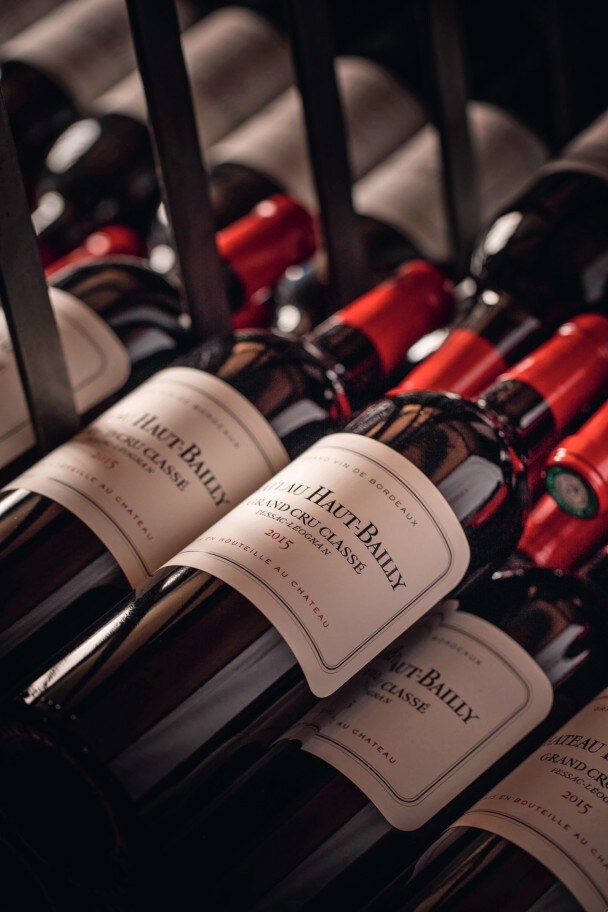
2015 CHÂTEAU HAUT-BAILLY.
(JSK) TASTED APRIL 2025 AT THE CHÂTEAU.
A “dream vintage”. Warm and dry summer, followed by perfect harvest conditions. Fruit, spice, gun metal aromas. Opulent with power but sophisticated refinement.
2006 CHÂTEAU HAUT-BAILLY.
(JSK) TASTED APRIL 2025 AT THE CHÂTEAU.
Smoke, mineral, tobacco, olives in the nose. In the mouth velour, suave. Black fruits. Touch of graphite. Perfectly balanced. Beautiful long finish.
1998 CHÂTEAU HAUT-BAILLY.
(GD) TASTED APRIL 2008 IN BORDEAUX.
Celebrating its 10th year at the Academie du Vin black tie dinner in Bordeaux, April 2008. Showing beautiful fruit and balance, delicious, with good concentration and all in harmony.
1988 CHÂTEAU HAUT-BAILLY.
(JSK) TASTED APRIL 2025 AT THE CHÂTEAU.
Brick showing at the edges. Spice and cigar on the nose. Wet stones. Bay leaf. Layers on the palate. Probably at its peak.
1985 CHÂTEAU HAUT-BAILLY.
(GD) TASTED JANUARY 2004 IN CALIFORNIA.
Gorgeous wine with rich fruit and flavor intensity, and yet so balanced and precise that it feels weightless and begs for more in the glass.
1961 CHÂTEAU HAUT-BAILLY.
(GD) TASTED NOVEMBER 2004 IN CALIFORNIA.
A monumental wine! There is a dense concentration with a 1947 like character, with a Pomerol like sweet ripe flavors, finishing with a classic Pessac-Leognan finesse, incredible vibrant color and intensity aging at a glacial speed. This is immortal. A great Bordeaux at its best.

Chapter 15
From French Roots to Southeast Asia to the Western Pacific. From Somewhere to Everywhere.