








Issue 25
Read
Chapter 13
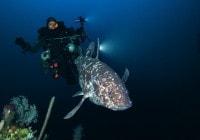
The Indonesian species of the coelacanth, Latimeria menadoensis, had never before been encountered—let alone photographed— by a diver. This is the story of a scientific and human adventure, 145 metres below the surface.


“A coelacanth! A coelacanth!”
These words, shouted through the loop of his rebreather by my teammate Julien Leblond, will forever remain etched in my memory.
But how can one be certain that narcosis, lurking at such depths, was not responsible for what we thought we were seeing? Were we even still conscious? Years of daydreams, fuelled by a wild, distant hope, suddenly gave way to a reality our brains struggled to accept. Connections scrambled, interpretation clouded. Could years of research and discussions with eminent specialists truly be materialising before our eyes?
Had this fleeting encounter, one October day in 2024, with one of the most emblematic marine animals, really taken place?
BUT LET US REWIND A LITTLE.
I believe my first memories of the coelacanth date back to childhood. In natural science books, encyclopaedias, or the children’s nature magazines we had at home. Later, of course, during my university years studying biology and marine ecology. How could any lecture on evolutionary biology fail to mention an animal of such importance to what scientists call “terrestrialisation”: the great transition from water to land by vertebrates?
And then, of course, there was Laurent Ballesta’s expedition in South Africa. I was a very young scientific diver at the time, and it was fascinating to watch their daily lives: these seasoned divers risking everything to come face to face with the mythical coelacanth, thereby offering scientists from the Muséum national d’Histoire naturelle in Paris (MNHN) the chance to study it in its natural, human-hostile habitat. I recall the passion, tinged with envy, lighting up the eyes of Gaël Clément and Marc Herbin, both MNHN researchers, when the divers returned with precious samples and images. At the time, it was unthinkable for me to attempt such an undertaking myself, yet that adventure remained lodged in the back of my mind.
And so it remained, until my arrival in Indonesia in 2014—a country that is home to the second known species of coelacanth, Latimeria menadoensis. This distant cousin of the African species, L. chalumnae, caused quite a stir when scientists discovered it in 1997, far from the coasts of Africa. Very soon, the search for information began: bibliographic research, compiling records of coelacanths caught by Indonesian fishermen, visiting the MNHN, exchanging with Laurent, and contacting Mark Erdmann. It was he, along with his wife Arnaz, who in 1997 discovered the very first specimen of the Indonesian Coelacanth in a fish market in Manado, in the north of Sulawesi. That individual would later be formally described as a species distinct from the African one.
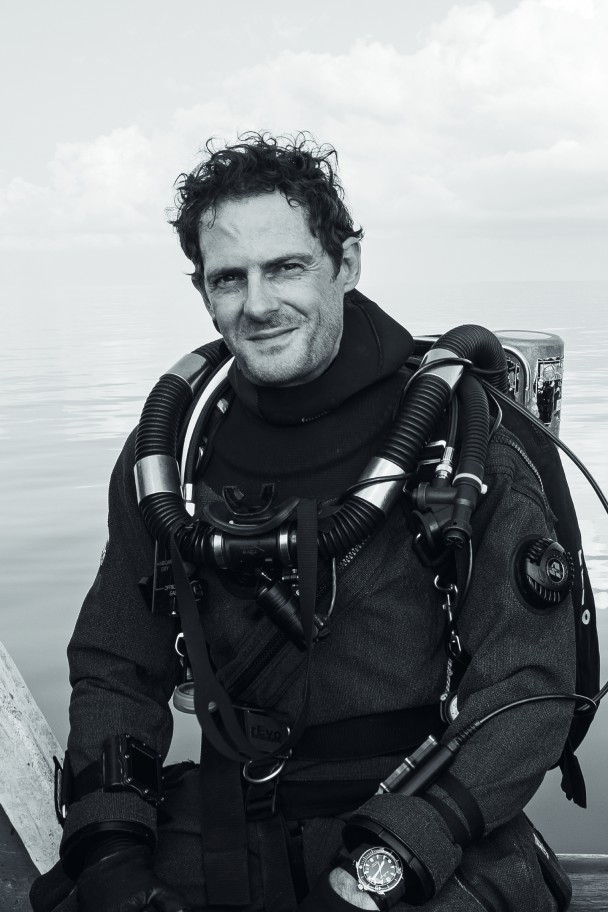
ALEXIS CHAPPUIS, Marine Biologist & Leader of UNSEEN Expeditions
Once believed to have vanished 70 million years ago, the elusive “coelacanth” or “Raja Laut” (“King of the Sea” in local Indonesian language), has once again revealed itself, allowing Alexis Chappuis and UNSEEN Expeditions to bring back the first images of this species (Latimeria menadoensis) ever taken by divers in its natural habitat. Following Laurent Ballesta’s legendary encounter with the West Indian Ocean species, in South Africa in 2013, this new chapter—once again proudly supported by Blancpain—is a breathtaking reminder that the ocean remains largely unknown and that exploration is as relevant as ever. The expedition is part of a collaborative effort with international and local scientific partners, including Pattimura (Ambon) and Udayana (Bali) Universities.
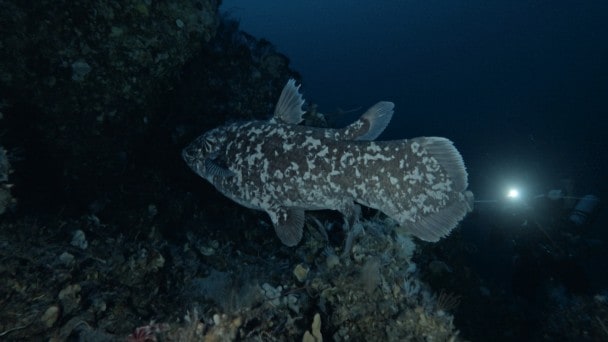
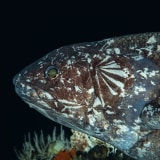
First Indonesian Coelacanth, Latimeria menadoensis, encountered and photographed by a diver, 145 metres below the surface. This individual is also the first coelacanth reported in the Moluccas archipelago, Indonesia.
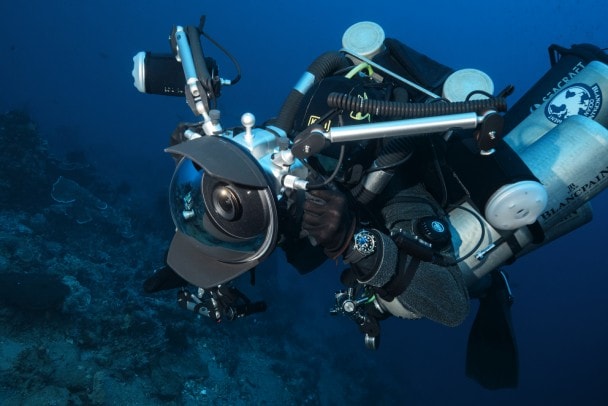
But it would take a few more years before I could legitimately claim access to the submerged kingdom of the “Raja Laut”— the “King of the Oceans” in Indonesian. Beyond years of training and practising deep mixed-gas diving with my instructor friend Marc Crane, it was also necessary to forge bonds and develop solid scientific partnerships with local universities, in order to study better and protect the deep environments we were exploring— grandly dubbed “mesophotic ecosystems”. In other words, habitats where light becomes scarce. In 2018, the French association UNSEEN was founded—“Underwater Scientific Exploration for Education”—which enabled us to carry out our first pilot project in Bali, funded by the renowned National Geographic Society. Despite such prestigious support, our budget was extremely tight. Just enough to cover our demanding dives. Yet this modest mission laid the foundations upon which our future projects would be built.
By 2020, Blancpain placed its trust in us and agreed to support our work. From that point on, we could finally begin to project ourselves into more ambitious dreams of exploration.
Thanks to partnerships established with local scientists—most notably Dr I Gede Hendrawan from Udayana University in Bali and Dr Gino Valentino Limmon from Pattimura University in Ambon—our study zone was able to extend into the Moluccas. Why the Moluccas? This vast archipelago of more than a thousand islands lies at the very heart of the Coral Triangle, the epicentre of marine biodiversity. And yet, compared with other major regions of Indonesia, it remains relatively isolated and overlooked.
To our knowledge, no diver had ever ventured into its mesophotic zone. This alone was enough to fuel our curiosity and our determination to document habitats no human had ever set eyes on. But there was also a more secret, unspoken reason: the certainty that the Indonesian Coelacanth ruled these waters.
Despite the intensity of local fishing, not a single specimen had ever been reported from this region of Indonesia—unlike Sulawesi to the west or West Papua to the east, where these animals had unfortunately been caught and documented. In spite of this apparent absence, the rooted conviction that they inhabited the Moluccas remained. According to marine charts—though notoriously imprecise in this part of the world—suitable habitats seemed to emerge. But of course, we would have to verify this in the field.
There was no way to guarantee an encounter with a coelacanth, of course. So, our aim was first to identify habitats that might be favourable to them.
Thus, in 2022, the first Moluccan mission, Deep Reefs of the Far East, was launched, dedicated to the Banda Sea, in the south. We had initially wished to include the northern Moluccas as well, but the distances were too great, and very few boats agreed to go there, as the journey was deemed too risky and complicated.
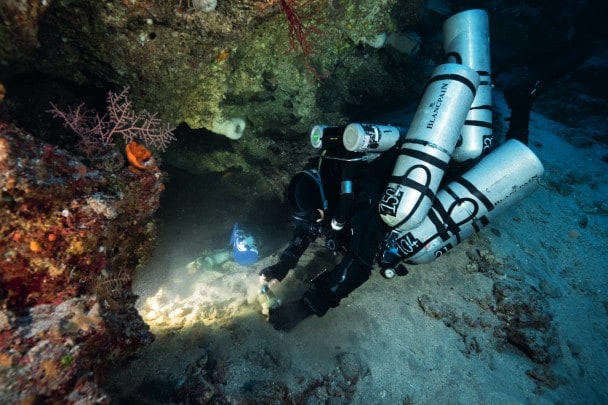
Marc Crane collecting sediment at 106 metres depth in 2022, so that scientists from Indonesia’s National Agency for Research and Innovation (BRIN) could analyse microplastic contamination.
Twenty-five deep dives, a total immersion time of over four days between the three divers, and not a trace of a coelacanth. Yet the mission was far from a failure! We documented exceptional mesophotic ecosystems, boasting astonishing biodiversity and rare species that had never be- fore been illustrated. Some sites might have been suitable for coelacanths, but the temperatures worked against us: 22 to 24°C at 130 metres deep—far too warm. After a more modest mission in the Banda Islands in 2023, designed to keep our collaborations active, a new large-scale expedition was finally organised in 2024— once again with the unwavering support of Blancpain. And this time, thanks to the generosity of Steven Watson, who placed at our disposal his vessel and his talented crew under the command of Captain John Maas, we would finally gain access to the northern Moluccas!
Just as in 2022, the goal of the mission was to cover as wide an area as possible in search of potential coelacanth habitats. We had only three weeks, which may seem like a lot, but in deep diving we can manage no more than one immersion per day, and from time to time we must remain dry to allow the body to recover from the physiological stress generated by such extreme depths.This meant that over twenty days at sea, between days of navigation and rest days for the deep divers, only fifteen deep dives could be carried out. Fewer than fifteen sites explored—this says much about the difficulty of studying mesophotic habitats!
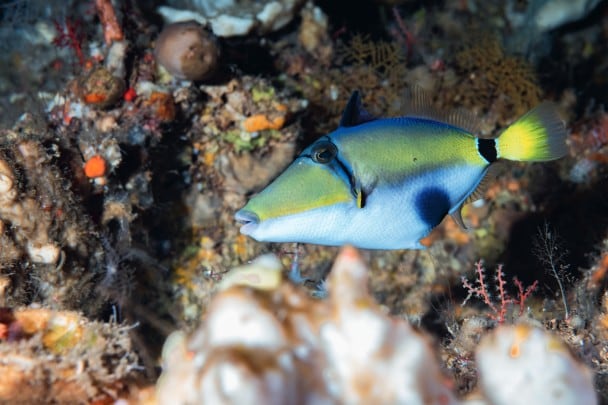
Indonesia, a vast archipelago of thousands of islands, harbours incredible biodiversity. Mesophotic reefs are no exception, sheltering little-known species such as this triggerfish, Rhinecanthus abyssus, never before photographed alive in its natural habitat.
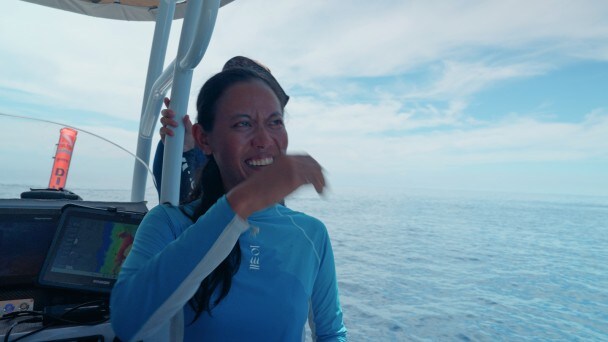
On board were several teams. The ship’s crew, of course; a team of shallow scientific divers, made up of three scientists from Pattimura University in Ambon—Jefry Sarimanella and Fajrin Rahayaan, led by Dr Gino Valentino Limmon; a team of two deep divers, Julien Leblond and myself, accompanied by our safety diver Yus Rizal Rumadaul. We also had the support of Melissa White from the International Seakeepers Society, and Gonzalo Pérez-Rosales. To immortalise the mission, Arnaud Denisot was responsible for terrestrial and aerial images.
To oversee this multidisciplinary and multicultural team, and to coordinate operations as smoothly as possible, it was essential to have a virtuous conductor. Or rather, a conductress. This role fell to Priska Widyastuti, an oceanographer by training, who since 2020 had been working tirelessly behind the scenes— both upstream and downstream of the expeditions—to manage much of the logistics, and on site to ensure synchronisation of the various teams and supervise the scientific process. A crucial role requiring remarkable adaptability and a wide range of skills!
Each time we arrived at a site, it was indispensable to comply with local traditions: there was no question of diving without first obtaining permission from the chiefs of the various villages. Many of them still follow traditional laws, very different from those imposed in modern society. For instance, fishing or harvesting certain fish or other marine animals is regularly prohibited for several months—or even years— to allow populations time to recover. In some cases, entire reefs are closed.
Behind these practices lies no “science” in the sense we understand it. No quotas calculated according to the interests of unscrupulous industries, nor enlightened recommendations from multi-qualified fisheries scientists. No—it is simply knowledge and understanding of the natural world, based on ancestral wisdom and practices passed down from generation to generation. And plain common sense. This is a form of marine resource management from which our leaders would do well to take inspiration, if we are to truly protect our oceans.
Such traditional customs demand respect and admiration, and we had to comply. At each new site, we presented ourselves to the village chief, explaining the reasons for our presence, so that he could decide whether or not to grant us permission to slip into the water for a dive on the reef under his care. There were times when this much-coveted permission was not granted, and we had no choice but to continue on to another place where our presence would be tolerated.
Life on board was in constant motion, and the days were long. Each day, Jefry, Fajrin and Gino carried out multiple dives and collected sponge and water samples for their research projects. Environmental DNA, extracted from the collected water, would provide an idea of the biodiversity present at the explored sites. Our colleagues also carried out transects to assess the health of shallow reefs— many of them in locations that had never before been studied. Once back on board, they had to catalogue their samples: sponge samples stored in 96 % ethanol, and water samples filtered—often late into the night— to preserve them for future analysis.
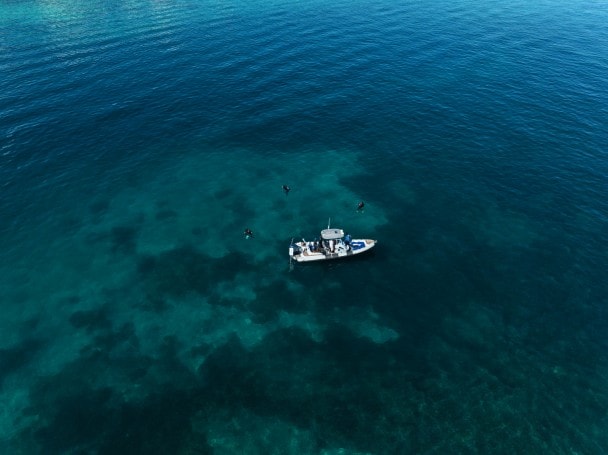
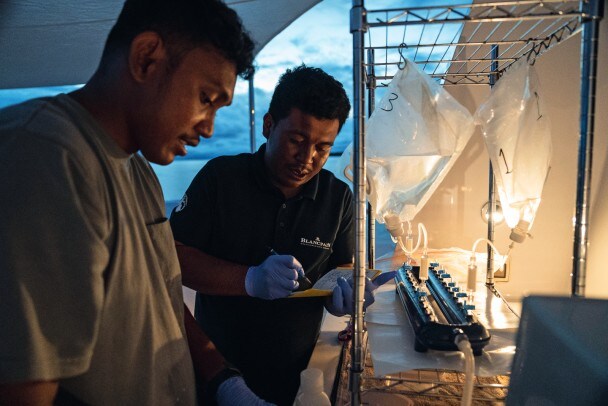
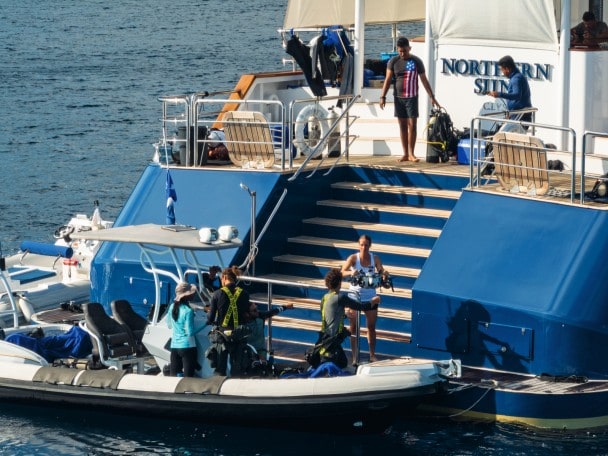
Teams at work daily. Dives follow one another, as does the processing of collected samples late into the evening.
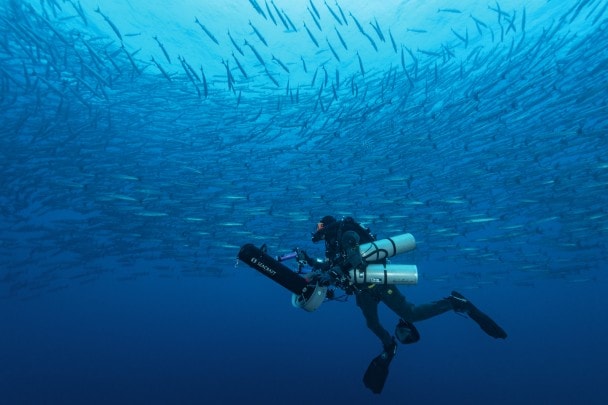
The best-preserved sites display an abundance of marine life now rare. And yet, this is how our oceans should look.
Deep dives also followed one after another. Julien and I repeated the same rituals each day. Descents along vertiginous dropoffs multiplied, until we reached the zone between 100 and 130 metres deep—the final frontier, marked by traces of ancient erosion some 20,000 years ago, when sea levels were at their lowest. It is here, in this twilight zone where barely 1 % of sunlight has survived its fatal descent into the abyss, that our chances of meeting the coelacanth were the greatest. But what were our real chances, after all? And how could we optimise them? How to decide where to dive—us, tiny terrestrial creatures faced with the immensity of the ocean? South or north of this rocky point? At what time? At what precise depth should we focus our search? Coelacanths are mobile; they can move horizontally or vertically. It would be all too easy to miss them by only a few metres. These questions haunted me, made my head spin. I tried to push them aside, reminding myself that one must begin somewhere. I only hoped that one day, all the clues and information gathered over the years would finally fall into place, like the pieces of a puzzle.
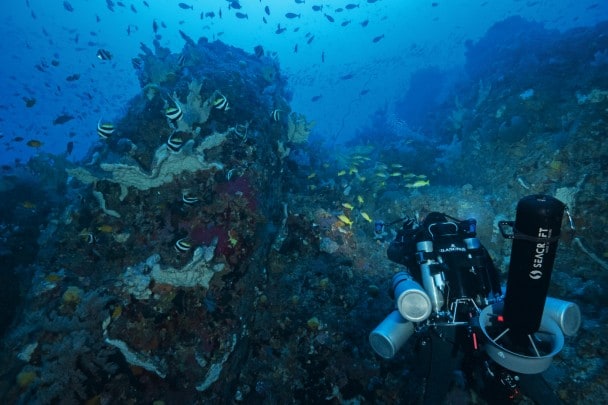
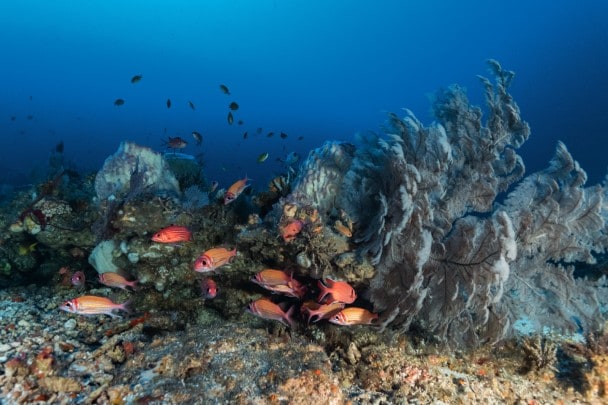
The expedition route, drawn from bathymetric charts and exchanges with Mark Erdmann, allowed us to visit magnificent sites of exceptional diversity. Some, however, had fallen victim to devastating blast fishing, years or even decades ago, and had yet to recover. Plains littered with coral debris, with no sign of regeneration. Fish diversity and abundance close to zero. Indelible scars of human greed. During these dives, currents were often strong, making them even more demanding. Yet the professionalism of the surface team, ensuring our safety, allowed us to keep a clear conscience and remain focused. We photographed species rarely— if ever—documented in their natural environment, and collected a few mesophotic sponge samples for our colleagues at Pattimura University. Who knows—perhaps one of them would prove new to science, or contain molecules of interest to medicine?
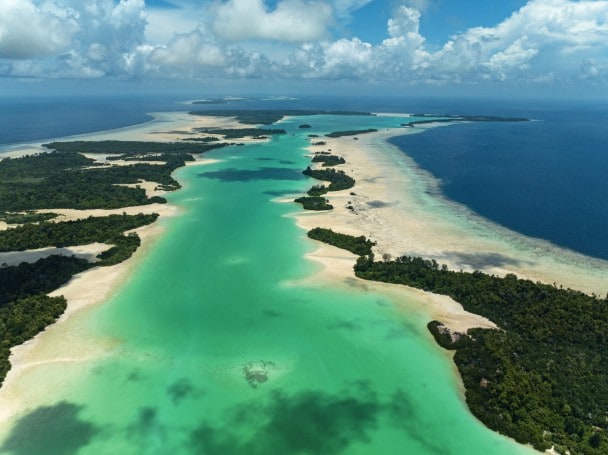
And then, on the tenth day of the expedition, we finally arrived at a site I had longed to explore. According to the charts, it promised great things below the surface. Waking shortly before six, as the boat searched for a safe anchorage despite a slight current, I was able to admire the splendid landscape before us—though I shall refrain from describing it here, in order to preserve its anonymity.
After a quick breakfast and preparing our equipment, we entered the water just before nine. A moment’s hesitation, then we found an ancient submerged lava flow plunging steeply into unreasonable depths. We decided to follow it. Dogtooth Tunas accompanied us throughout our descent. We passed through what seemed to be two thermoclines—those thin layers where water temperature suddenly plummets. At 120 metres deep, a large vertical wall, fairly smooth and covered in sponges, appeared before us, relatively poor in fish for lack of cavities. Moving a few metres sideways, we found large crevices and rock outcrops. This complex topography continued further down, though we prudently stopped at -125 metres. It was the very spark I had been waiting for. A quick glance downward revealed a labyrinthine world of boulders and cavities. Though the dim light made certainty impossible, this site was the most promising I had explored in all these years—for what we were seeking. Even the temperatures seemed favourable. The ascent was just as impressive, taking us past large fissures and into a zone of extraordinary diversity between -80 and -60 metres. Then came the long decompression phase—more than three hours— enduring strong, shifting currents.
Once out of the water, I decided we had to return to this site—only deeper. The dive was planned for two days later. At first, the weather was not on our side: swell from a cyclone in the Philippines rocked our boat, complicating entry. Indeed, the inflatable struggled to position itself above the site, and once in the water, it was difficult to retrieve our gear. Finally, after the turmoil of the surface, the calm of immersion. We descended along the lava flow. It was dark. The first sharp drop in temperature came at -35 metres. We pressed on quickly with our scooters: -60, -80, -100 metres. The reef streamed past our eyes; light faded along with the temperature. Pressure was increasing. A strange feeling came over me—that this day would be different. But I tried to silence that voice, to avoid the disappointment of a missed rendezvous. After all, the wild world is unpredictable and untamed, mercifully immune to our expectations. Our plan was to descend to -150 metres to verify the presence of a cave or overhang I thought I had glimpsed two days earlier. We reached -152 metres, still surrounded by extraordinary habitat. But minutes at such depths are costly; seconds stretched into hours during the long ascent. After only a few minutes, we had to leave those intoxicating depths and begin decompression.
A massive boulder loomed before us. To cover a larger area, we split: Julien to the right, myself to the left.
And then suddenly—a barely contained shout: “A coelacanth! A coelacanth!” Had I heard correctly? “Impossible… Is this really the place and moment for such a joke? No—he wouldn’t dare.” In a split second, this thought flashed through my mind. I retraced my steps, hurriedly circling the boulder to the right to join Julien.
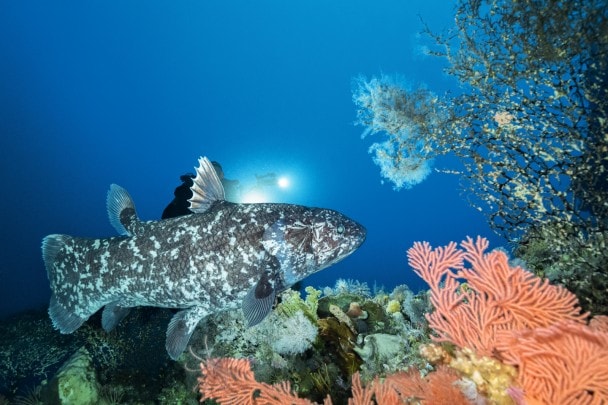
And there—the shock. Time stopped. I could not believe my eyes. There it was, before me, floating effortlessly just centimetres above the rock, nestled near a beautiful orange seafan. Despite the enveloping darkness, there was no mistaking it: the typical stocky silhouette, the unique colouring, those characteristic fins… And above all, that incomparable green eye, into which I too gazed. Julien had neither joked nor dreamed. This creature from another age has no living equal, and could not possibly be mistaken for any other. Its placidity and indifference contrasted with most marine creatures, which usually flee before the super-predator that we humans are. But the coelacanth remained, confident in its robustness. After all, it had weathered the ages and encountered the fiercest marine creatures, surviving ecological crises and mass extinctions that punctuated our planet’s history. It was not about to falter now. Yet its stillness was only apparent. Looking closer, its lobed fins moved gently, maintaining delicate balance, suspended near the rock, barely brushing against the organisms it shared its habitat with.
Its dorsal fin, so distinctive, was raised, bravely spreading its rays bristling with tiny spines. A sign of defence? No doubt our presence, and our lights, disturbed it. We tried as best we could to minimise discomfort—avoiding direct light to spare its eyes, and never cornering it, ensuring it always had an escape route should our presence become too unbearable.
Once the initial shock of this unexpected encounter had passed, and in a barely containable euphoria, we needed to take pictures to bring back proof of this extraordinary observation. And also to make sure we weren’t caught in a hallucinatory delusion. Time was short. I struggled to get my camera, still clipped to my right side. I removed—or rather ripped off—the protective cover of the dome, set the flashes, framed the shot… Why are my hands shaking so much… I need to breathe to calm myself.
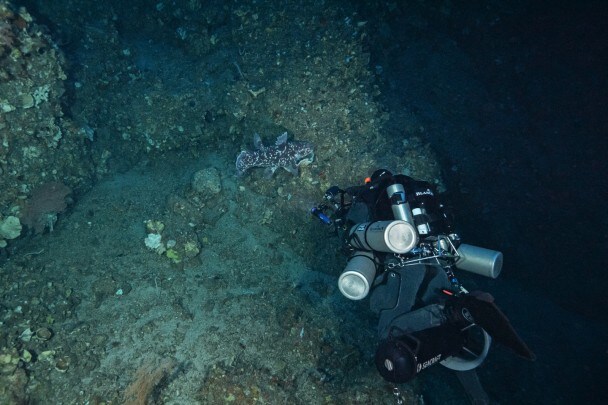
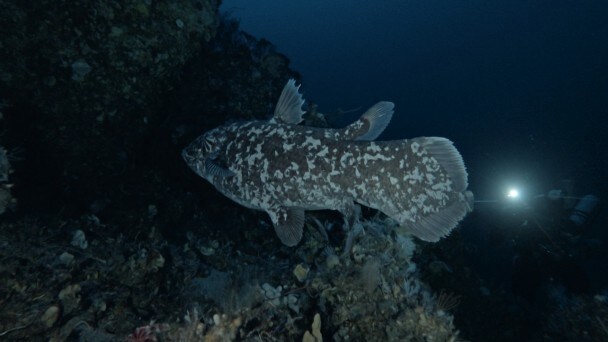
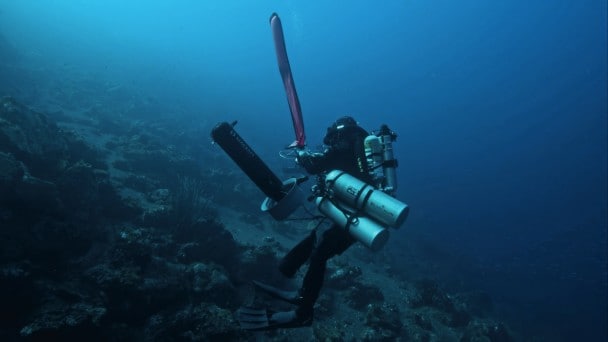
Focus. I press the shutter once, twice… Meanwhile, Julien is filming, a permanent smile visible in his eyes. A few shots later, and it was already time to begin our long ascent in earnest. We had only been in each other’s presence for five minutes, and yet it was already time to part ways. Faced with this totem of the underwater world, how could one remain reasonable at such unreasonable depths? Yet we had to silence that admiration, that desire to contemplate, which would have tempted us to stay longer. It was absolutely vital to force ourselves to ascend, to leave it to its sunken kingdom, so inhospitable to us, mere terrestrial creatures.
There are no words to describe the emotions Julien and I felt. To find, around a rock at 145 metres deep, an animal I had fantasised about for so many years, in the middle of a vast archipelago where never a single sighting had previously been reported… Emotions collided. No photos were taken during the four hours of decompression that followed. My mind was elsewhere. First came the immense joy that Nature had gifted us such an encounter, that all our efforts and sacrifices had finally been rewarded, and that our hypotheses were not entirely crazy. Then the excitement of thinking about our team’s reaction on the surface, unaware of what had occurred, and that of our partners. Then, very quickly, darker questions emerged: should we reveal our discovery? Could our revelation risk threatening this potential new coelacanth population by inciting human greed? Despite these haunting questions, my smile never wavered.
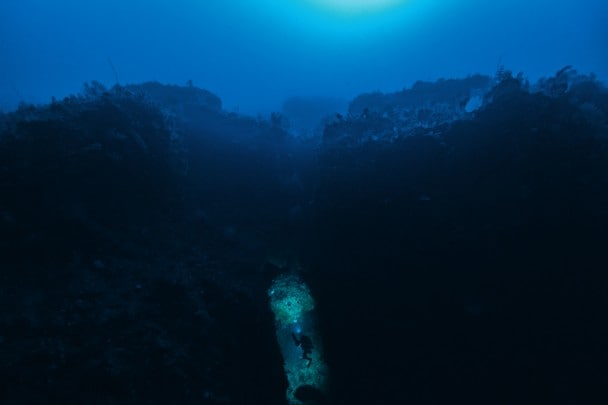
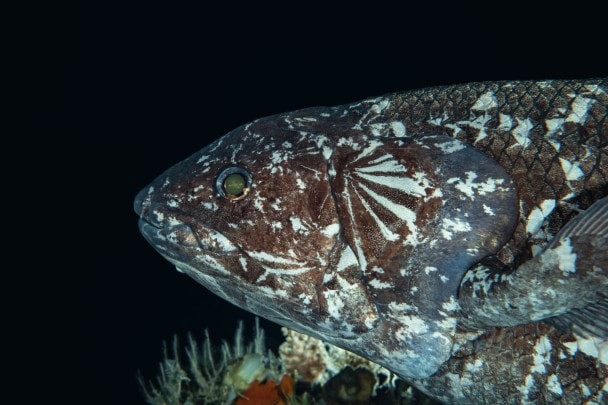
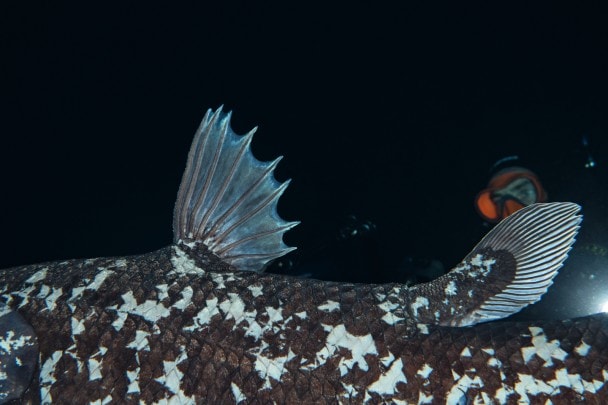
An underwater world of twisted topography, far from the surface, sheltering one of the most mythical living animals. The coelacanth’s distinctive morphology is striking, as is its movement, using its characteristic lobed fins.
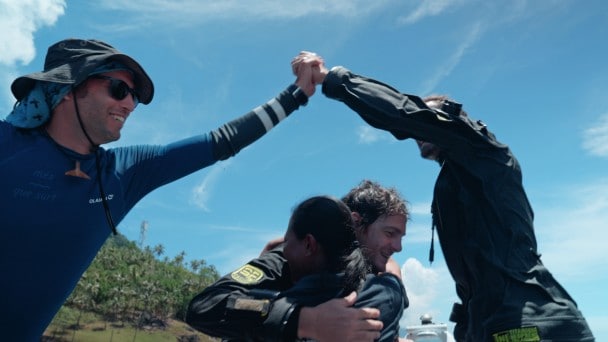
We returned to the surface with part of the team, our guardian angels who had patiently waited for over four hours, floating with the swell and currents. Exhausted, jaws sore from so many hours underwater, faces swollen, we tried until the last moment to avoid their questioning looks: they knew we had news to share. But what? The news dropped. Priska broke into tears, Arnaud couldn’t believe it. Then came general euphoria. The same reception awaited us on the boat, where the captain had left his bridge to congratulate us. He, too, was astonished. It was the day after his birthday, and a few weeks later, he would retire. He could not have wished for a finer gift, nor could we. We are in- finitely grateful to him and his crew, and to Steven Watson, for allowing us to realise this utterly mad dream.
No project of this kind could succeed without a union of varied talents, from passionate individuals of different backgrounds working hand in hand to achieve set objectives. And, of course, to make it all possible, it is essential to rely on equally passionate partners who empower us to act.
The next day, we tried our luck again, and it was my turn to encounter the same creature, at 140 metres deep, at the same spot as the day before. On this occasion, we had a little more time. Eight precious minutes in its presence. More contemplation, more images. We savoured this extraordinary fortune before once again beginning our long ascent towards the light. The following day, however, our animal did not appear. We searched in vain. A stark reminder: wildlife is free and unpredictable. Ultimately, what could be nobler than these fleeting, unexpected encounters in the natural world, and the slight frustration when they do not occur? In an age of virtual immediacy, it is essential to remember that nothing is more magnificent than a free animal in its preserved habitat, rather than pacing behind bars or a thick plexiglass window before a crowd jostling for the perfect social media photo. Simply knowing our coelacanth exists somewhere, perhaps nearby, living independently, is enough to delight us and offset the selfish disappointment of not being able to greet it one last time. Now, we must continue our journey to other remote islands for the remaining six days of our mission.
After a long reflection and numerous discussions with those involved in the project, it was decided to publicly reveal the discovery. Today, the natural world faces an unprecedented, relentless and violent human assault. Entire ecosystems are being devastated and collapsing; species vanish at an alarming rate, almost unnoticed, amidst intolerable silence. The northern Moluccas are not spared: mining to fuel our energy transition and insatiable consumption, producing batteries for electric vehicles and connected devices, is devouring millennia-old primary forests, along with the indigenous populations who once lived there in total harmony. By domino effect, entire reefs, vital for local communities’ sustenance, are devastated by sediment runoff, sometimes contaminated with chemicals, no longer held back by vegetation.
The coelacanth is such an emblematic species that it attracts major interest locally, nationally, and internationally. It is a remarkable lever for marine habitat conservation, capable of uniting scientists, policymakers, and the public around ocean protection, and encouraging the creation of new Marine Protected Areas. As an “umbrella species”, its protection could ensure the safeguarding of habitats in which it thrives, and therefore all other species sharing that environment.
We thus felt it necessary to reveal its existence in the Moluccas, as it not only provides valuable new information on the distribution of this still enigmatic species, which is already listed as “vulnerable” by IUCN, but also opens the door to the development of a network of protected natural areas to better conserve it.
We allow ourselves to dream that, one day, our modest observations and work might enable the Indonesian Coelacanth and all species inhabiting its deep-water realm to live peacefully, shielded from human folly.
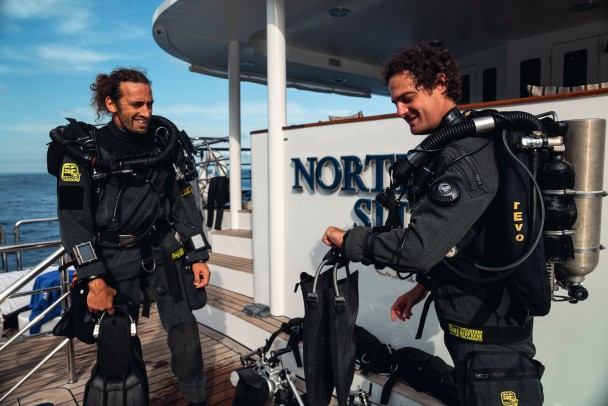
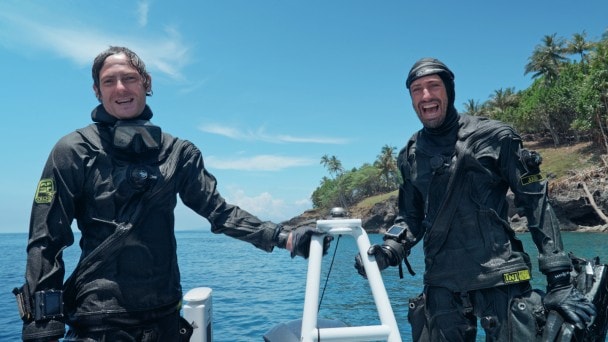
Julien and Alexis making final checks before the day’s dive.
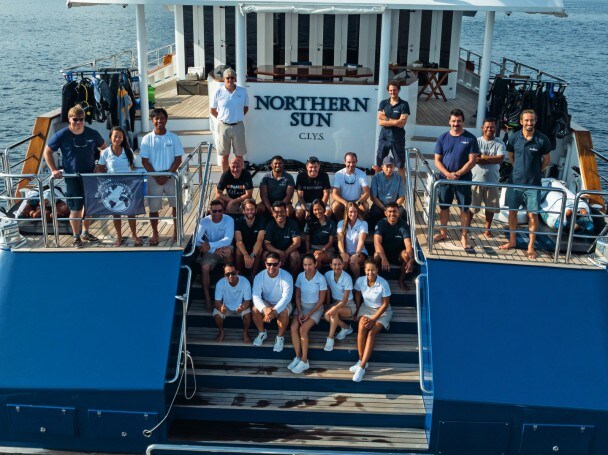
Photo of the team involved in this discovery.

Chapter 14
Defined by elegance and refinement in both its wines and its château.